
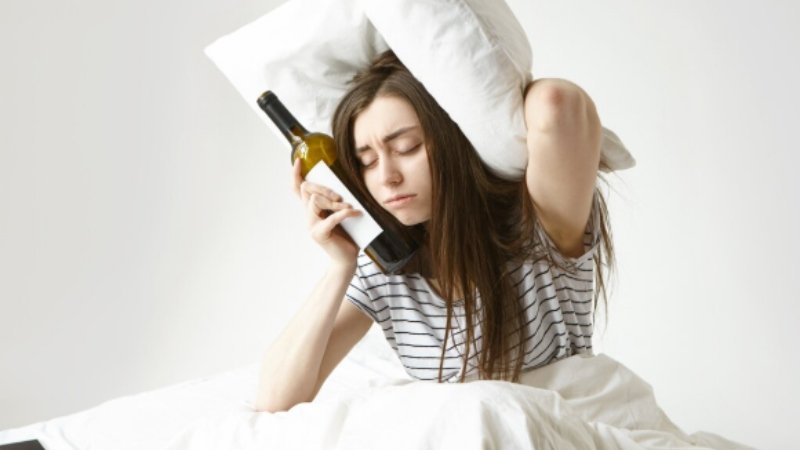
Most people have been there. You wake up after a night out feeling physically rough, but the physical part almost takes a back seat to something harder to name. A low-grade dread. Racing thoughts. A sense that something is wrong even when nothing specific is. This experience is surprisingly common, and understanding the mechanics behind it can make a real difference in how you manage your relationship with alcohol and your mental health.
This article covers what alcohol actually does to your brain chemistry and sleep architecture, why some people feel emotionally worse the morning after even a modest amount, and what practical steps tend to help. There is no magic cure here, but there is genuine science worth knowing.
What Alcohol Does to Your Brain While You Sleep
Alcohol is a central nervous system depressant, which sounds like it would make sleep better. And in the short term, it does speed up the time it takes to fall asleep. The problem is what happens a few hours later. As the body metabolizes alcohol, it triggers a rebound effect in the nervous system. The same system that was being suppressed starts swinging in the opposite direction.
Sleep itself is not a single uniform state. It cycles through light sleep, deep slow-wave sleep, and REM sleep, the stage associated with dreaming and emotional processing. Alcohol heavily suppresses REM sleep in the first half of the night. Then, as blood alcohol levels drop, REM sleep surges back in a compensatory wave during the second half. This rebound REM is often more intense, filled with vivid or disturbing dreams, and it is far less restorative than natural sleep cycles. The result is that even if you slept eight hours, you wake up feeling cognitively and emotionally depleted.
The Neurochemistry Behind the Morning-After Mood Crash
Alcohol floods the brain with dopamine and also amplifies the effects of GABA, the primary inhibitory neurotransmitter. At the same time, it suppresses glutamate, which is excitatory. This is essentially why drinking feels relaxing or euphoric for many people. But the brain does not simply accept this chemical shift. It compensates by downregulating GABA receptors and ramping up glutamate activity to try to restore balance.
When the alcohol clears, that compensation is still in full swing. There is now too much excitatory activity and not enough inhibitory counterbalance. The neurological result is a state of hyperarousal. Heart rate may be slightly elevated. The stress hormone cortisol rises, often peaking in the early morning hours. Norepinephrine, the neurotransmitter involved in the fight-or-flight response, increases as well. This is not a metaphor for feeling bad. It is a literal physiological state of heightened alarm in the nervous system.
For people who already have a tendency toward anxiety, this neurochemical environment can feel genuinely distressing. Research published in the journal Alcohol and Alcoholism has described this phenomenon using the term “hangxiety,” and studies suggest that people with higher baseline anxiety or shyness scores experience significantly more pronounced next-day anxiety following alcohol consumption. The anxiety after a night of drinking that many people dismiss as simple guilt or embarrassment often has a very real neurobiological foundation, not just a psychological one.
How Much Alcohol Actually Causes These Effects
There is no clean threshold. Individual variation is enormous, and factors like body weight, hydration, food intake, genetic differences in alcohol metabolism, and pre-existing mental health conditions all play a role. That said, research does point to some general patterns worth being aware of.
| Consumption Level | Typical Sleep Impact | Next-Day Mood Effect |
| 1 to 2 standard drinks | Mild REM suppression early in the night | Minimal for most people; noticeable in those with anxiety disorders |
| 3 to 4 standard drinks | Moderate REM disruption; fragmented second-half sleep | Fatigue, mild irritability, and low mood are common |
| 5 or more standard drinks | Significant REM suppression; frequent waking; reduced sleep quality overall | Pronounced cortisol spike, heightened anxiety, and mood instability are likely |
| Regular heavy use over time | Chronic sleep architecture disruption, even on sober nights | Elevated baseline anxiety, increased risk of depression |
The Centers for Disease Control and Prevention defines heavy drinking as more than 14 drinks per week for men and more than 7 per week for women. Even within those limits, regular consumption at the higher end is enough to produce measurable changes in sleep quality and mood regulation over time.
The Self-Medication Trap
One of the more insidious patterns that develops around alcohol and mental health is the self-medication cycle. A person feels anxious or socially uncomfortable, drinks to take the edge off, sleeps poorly, wakes up feeling worse, and finds that the most immediate relief is another drink. This is not a character flaw. It is a predictable neurological loop, and it is worth understanding it as one.
According to the Anxiety and Depression Association of America, roughly 20 percent of people with social anxiety disorder report using alcohol to cope with their symptoms. The short-term relief is real, which is exactly what makes the pattern so sticky. But over weeks and months, regular alcohol use actually sensitizes the stress response system. The brain becomes more reactive to perceived threats, not less. The anxiety that alcohol temporarily quiets tends to grow stronger in the spaces between drinks.
Signs the Cycle May Be Taking Hold
- Drinking specifically to manage social anxiety or worry before an event
- Noticing that the same amount of alcohol produces less calming effect than it used to
- Feeling a significant mood dip or anxious restlessness on days you do not drink
- Using alcohol to fall asleep regularly, even a couple of nights per week
- Experiencing intrusive or distressing thoughts that feel most intense the morning after drinking
Practical Ways to Break the Pattern
Understanding the mechanism is genuinely useful because it reframes the experience. The morning-after dread is not a sign that you did something terrible or that something is deeply wrong with you. It is a predictable chemical hangover in your nervous system. Knowing that does not eliminate the feeling, but it does make it easier to respond to it rationally rather than spiral into additional worry about the worry itself.
Hydration matters more than many people realize. Alcohol is a diuretic, and even mild dehydration has measurable effects on mood and cognitive function. Drinking water before bed and again first thing in the morning is genuinely helpful, not just folk wisdom. Electrolytes matter too, because alcohol depletes sodium, potassium, and magnesium, all of which play roles in nerve signaling.
Food timing also has an impact. Eating a balanced meal before drinking slows alcohol absorption and reduces peak blood alcohol concentration, which in turn reduces the severity of the rebound effect the next morning. This is not about eating greasy food as a hangover cure after the fact. The protective effect happens before and during drinking, not after.
Longer-Term Strategies Worth Considering
- Track your mood on days after drinking versus days you abstain. Many people are surprised by how clear the correlation becomes over even a few weeks.
- Experiment with alcohol-free weeks. The National Institute on Alcohol Abuse and Alcoholism notes that many people who take short breaks report significant improvements in sleep quality within just a few days.
- Replace the ritual, not just the substance. If you drink to wind down, the ritual of having something to hold and sip plays a role. Non-alcoholic alternatives can preserve the social and sensory habit while eliminating the neurochemical disruption.
- Consider working with a therapist who specializes in anxiety, particularly if you notice that you are using alcohol primarily to manage worry or social discomfort. Cognitive behavioral therapy has strong evidence behind it for both anxiety and alcohol use patterns.
- Be honest with your doctor. Alcohol and anxiety interact with many medications, and a primary care physician can give personalized guidance that general articles cannot.
When Professional Support Makes Sense
There is a wide spectrum between casual drinking and alcohol use disorder, and the mental health effects of alcohol do not wait until someone reaches the clinical end of that spectrum to become significant. If you are regularly sleeping poorly, waking up with a racing heart or a sense of dread, or finding that alcohol is increasingly central to how you manage stress, those are reasonable signals to take seriously.
Mental health professionals who work with anxiety and substance use are familiar with this pattern. They are not going to assume the worst about your habits based on a conversation. What they can offer is a clearer picture of whether what you are experiencing reflects a temporary lifestyle issue or something that would benefit from structured support. Either way, having that clarity tends to be more useful than continuing to wonder.
The relationship between alcohol and mental health is genuinely bidirectional and complex. But it is also well-studied enough that there are real, evidence-based tools for managing it. Paying attention to how alcohol affects your specific nervous system, rather than relying on averages or assuming everyone experiences it the same way, is one of the more useful things you can do for your long-term mental wellbeing.