
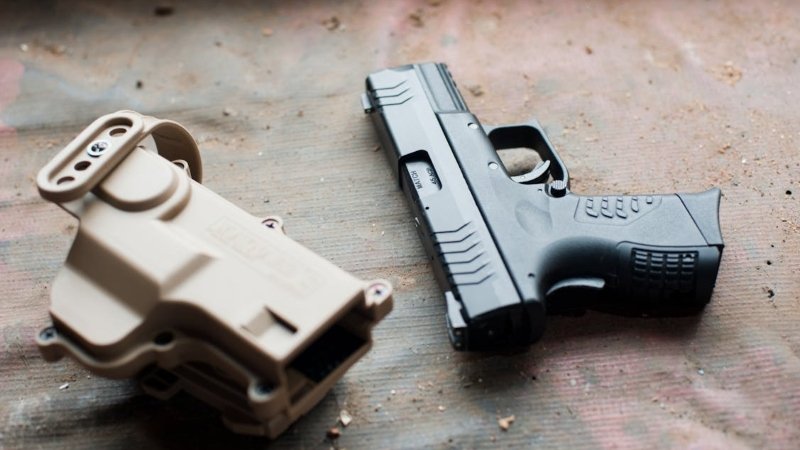
The firearms industry is undergoing a noticeable shift in how equipment is designed and used. In earlier decades, buyers often treated a firearm as a finished product with limited room for change. Today, many users see firearms as adaptable platforms that can evolve through accessories and modular upgrades. This shift has helped create what analysts often call the modern tactical ecosystem.
Several factors are driving this transition. Consumers increasingly want equipment that can adapt to a range of situations, including range training, home defense, and professional use. At the same time, improvements in CNC machining, advanced polymers, and precision engineering allow manufacturers to develop accessories that integrate smoothly with existing platforms.
This evolution has expanded the role of accessory manufacturers within the broader firearms economy. Companies producing stabilization systems, modular frames, and advanced mounting solutions now influence how platforms perform in real-world environments. As a result, buyers focus more on compatibility, ease of installation, and performance improvements when evaluating modern firearm accessories.
From Traditional Handguns to Modular Platforms
Handgun design once focused on fixed configurations with only minor customization options. Over time, manufacturers began introducing accessories that allow users to expand the capabilities of their existing platforms. Stabilization systems and chassis platforms now allow users to attach rails, optics, and ergonomic components without permanently modifying the firearm. As the market has grown, several manufacturers have introduced modular chassis systems designed to enhance control and adaptability.
Two well-known examples are the S-PRO system and the Sig Flux platform. Both are modular handgun chassis designs that aim to improve stability and functionality by integrating features such as accessory rails, brace or stock configurations, and rapid deployment mechanisms. Because buyers often evaluate these features closely, many professionals and enthusiasts spend time comparing S-PRO and Sig Flux systems to determine which offers better performance in areas such as deployment speed, tool-free installation, and cross-platform compatibility.
Some users also consider compatibility with accessories like suppressors, depending on their specific use case and legal regulations, to further enhance control and shooting experience.
Market Demand for Personal Defense Weapon Conversions
Demand for Personal Defense Weapon-style conversions has increased steadily in recent years. These systems allow compact handguns to gain improved stability and control through integrated support structures and accessory rails.
Users often prefer this approach because it enhances handling without significantly increasing overall size. A stabilized platform can improve recoil management and target acquisition, particularly in situations where rapid control matters.
Manufacturers have responded by designing lightweight PDW-style accessories that deploy quickly and integrate easily with optics and illumination tools. This combination of compact design and functional performance has attracted attention from both civilian enthusiasts and professional users.
Economic Shifts: Upgrading Instead of Replacing
Economic considerations also influence the rising demand for advanced firearm accessories. Purchasing a new firearm can involve substantial cost, licensing requirements, and additional training. For many users, upgrading an existing platform provides a more practical alternative.
Accessories such as stabilization systems and modular frames allow owners to enhance performance without abandoning equipment they already trust. This approach helps users improve functionality while maintaining familiarity with the platform.
From a business perspective, this shift supports a robust aftermarket. Manufacturers benefit from continued accessory sales, while consumers gain flexible upgrade paths that extend the usefulness of their firearms without requiring full replacement.
Material Innovation: CNC Aluminum vs. Advanced Polymer Engineering
Material science plays a major role in the development of modern firearm accessories. Manufacturers now rely heavily on CNC-machined aluminum and reinforced polymers to achieve strength, durability, and precise tolerances. CNC aluminum offers rigidity and structural stability, which is especially valuable for chassis systems that must handle repeated recoil while maintaining consistent alignment with optics and accessories.
Advanced polymers offer distinct advantages. They reduce overall weight and allow manufacturers to produce complex shapes with high reliability. Many modern accessory systems combine aluminum frames with reinforced polymer components to balance durability and portability. This hybrid approach helps companies create products that remain strong under stress while staying comfortable for extended use during training or professional applications.
The Influence of Competitive Shooting and Tactical Fitness Trends
Competitive shooting sports have significantly influenced the direction of firearm accessory design. Disciplines such as USPSA and IPSC emphasize speed, precision, and efficient weapon handling. Manufacturers often observe these environments closely because they highlight which design features improve real-world performance.
At the same time, tactical training and performance-focused shooting communities continue to grow. Many enthusiasts now combine physical conditioning with structured firearms practice. This trend has increased interest in accessories that improve ergonomics, recoil control, and quick target acquisition. As a result, manufacturers frequently design products that support both competitive performance and practical defensive use.
Supply Chain Resilience and the Growth of Aftermarket Ecosystems
Supply chain disruptions in recent years forced many firearm accessory manufacturers to rethink how they produce and distribute products. Companies increasingly rely on domestic machining facilities, diversified supplier networks, and vertically integrated manufacturing processes. These adjustments help ensure consistent production even during periods of global disruption.
Another outcome of these changes is the expansion of aftermarket ecosystems. Many accessories are now designed to work across multiple firearm brands and models. Cross-platform compatibility allows users to upgrade different platforms with a single system. It also encourages collaboration between firearm manufacturers and accessory developers, strengthening the overall industry infrastructure.
Regulatory Considerations and the Business of Compliance-Focused Design
Regulation remains an important factor in the firearm accessory industry. Manufacturers must constantly evaluate how evolving legal frameworks affect product design and distribution. This requires companies to integrate compliance considerations into the engineering process early.
Compliance-focused design allows manufacturers to create accessories that meet legal definitions while still delivering practical performance improvements. Companies that understand regulatory environments can plan product releases more effectively and reach broader markets. This strategic approach reduces risk and ensures innovation continues while maintaining compliance with applicable laws and industry standards.
The Future of Advanced Firearm Accessories
The rising demand for advanced firearm accessories reflects several interconnected market forces. Innovations in materials, growing interest in competitive shooting, and stronger aftermarket ecosystems have all contributed to the shift toward modular firearm platforms. At the same time, economic considerations encourage users to enhance existing equipment rather than replace it entirely.
Manufacturers that prioritize compatibility, durability, and regulatory awareness are positioned to succeed in this evolving landscape. As firearms continue to function more like adaptable platforms, high-performance accessories will remain central to the industry’s growth. This focus on modular engineering helps bridge the needs of enthusiasts, professionals, and modern defense technology markets.