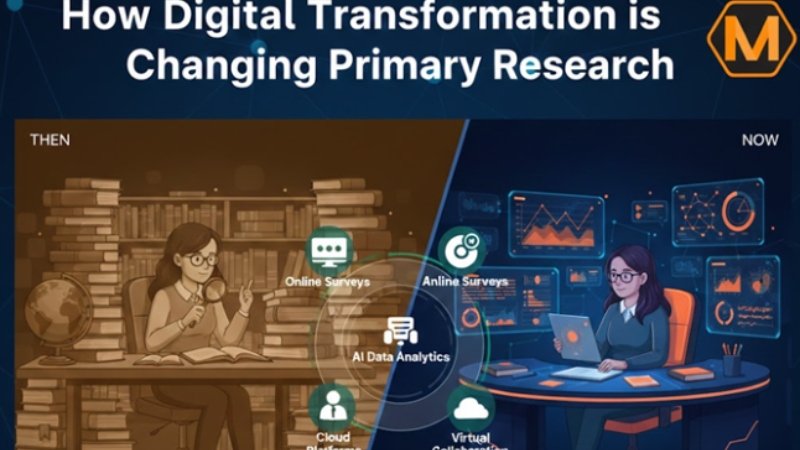
The old image of a student sitting in a dusty library basement, manually flipping through physical card catalogs, is quickly becoming a history lesson. Today, the world of education is experiencing a massive, unstoppable shift. We call this digital transformation, and it is completely changing how we find, process, and validate information. For students today, this shift is not just about replacing a spiral notebook with a laptop. It represents a fundamental change in primary research. Students now gather new and original data directly from the source in more advanced ways.
In this new era, students are no longer limited by their physical location or the specific books sitting on a local shelf. Thanks to the support and guidance of an online assignment expert from myassignmenthelp, many learners are now discovering how to navigate these complex digital waters with much more confidence and skill. Digital tools have turned the entire world into a giant, connected laboratory. You might conduct a survey across three continents. You might use cloud-based software to sort thousands of interview responses. Either way, researchers now work with modern tools built for the 21st century.
The Evolution of Data Collection: From Paper to Pixels
The most obvious change brought by digital transformation is the method by which we actually get our data. In the past, students often handed out paper surveys in school hallways. They also conducted face-to-face interviews using bulky tape recorders. Digital transformation has replaced these slow, manual methods with high-speed, automated alternatives.
- Globalized Online Surveys: Tools like Google Forms, SurveyMonkey, or Qualtrics allow students to reach hundreds of participants in minutes. You are no longer limited to the people in your classroom; you can gather opinions from people in London, Tokyo, and New York simultaneously.
- Virtual Focus Groups: Instead of coordinating a physical meeting in a rented room, researchers use Zoom, Microsoft Teams, or Google Meet to talk to experts globally. This allows for a much more diverse range of perspectives.
- Digital Ethnography: Students can now study social behaviors by observing how people interact in online communities, forums, and social media platforms. This provides a “fly on the wall” view of human behavior that was previously very difficult to capture.
This shift doesn’t just save a massive amount of paper; it saves the most precious resource a student has: time. When data is collected digitally, it is already “clean” and ready for analysis. You don’t have to spend twelve hours typing up handwritten notes or manually tallying survey ticks. Instead, you can focus your energy on what the data actually means and how it proves your thesis.
The Rise of Big Data and Open Access
One of the biggest advantages of the digital age is the sheer volume of information available. In the “old days,” primary research often faced limits. Students struggled to find enough people to interview. They also lacked enough data points to identify clear trends. Today, we live in the age of Big Data.
Digital transformation has led to “Open Access” movements where universities and governments share their raw data sets with the public. A student studying climate change doesn’t necessarily have to go out and measure ocean temperatures themselves; they can access primary satellite data provided by NASA. This allows students to conduct high-level primary research that was once reserved for professional scientists with million-dollar budgets.
However, this access comes with a responsibility. Students must learn “data literacy.” This involves understanding how to read complex spreadsheets, how to identify outliers in data, and how to visualize that data using charts and graphs so that a regular reader can understand it. The ability to turn a wall of numbers into a clear, convincing story is one of the most important skills a modern student can develop.
Artificial Intelligence: The Modern Research Partner
We cannot talk about digital change without mentioning Artificial Intelligence (AI). For a 12th-grade student or a first-year university learner, AI is becoming a powerful, albeit controversial, partner in the research process. It helps in ways that were considered science fiction just ten years ago.
AI can help brainstorm research questions that haven’t been asked before, find “gaps” in existing studies, and even help organize qualitative data. For example, if you interview ten different people, an AI tool can quickly find the common themes and keywords in their answers, saving you days of manual coding.
However, this also brings up massive questions about academic integrity. Students have to learn how to use these tools ethically—using them to organize thoughts, check grammar, and analyze data rather than letting the machine do the actual thinking for them. Staying ahead of these fast-moving trends often requires visiting a reliable assignment helper website to understand the latest global standards for original work and to properly cite AI-assisted research.
Navigating the Challenge of Information Overload
While having more tools is a great thing, it also creates a brand-new problem that our parents never had to deal with: “Information Overload.” When you have a million search results for a single query, how do you know which ones are actually useful?
Digital transformation has forced students to become “detectives” of information. This means learning how to verify sources, check for hidden biases, and use advanced search filters to cut through the noise. It is no longer enough to just find a source; you have to prove why it is a credible one.
Managing your time and staying focused is the key to surviving this overload. If you lose focus while scrolling through endless tabs and PDFs, you can easily delay your project and miss your deadline. The digital world is full of distractions, and the most successful researchers are those who can use digital tools to stay organized rather than getting overwhelmed by them.
Digital Collaboration and Cloud-Based Thinking
In the past, primary research was often a lonely job. You worked on your paper by yourself at your desk. Digital transformation has turned research into a team sport. Through cloud-based platforms like Google Workspace or Notion, students can collaborate on primary research projects in real-time.
Three students can work on the same document simultaneously—one analyzing the data, one writing the introduction, and one formatting the bibliography. This reflects how the professional world works. Whether in a business office or a scientific lab, projects are collaborative. By using these digital tools in school, students are preparing themselves for the “real world,” where being able to work in a shared digital space is a mandatory requirement for almost every job.
The Ethics of Digital Research
As we move more of our lives online, the ethics of how we collect data have changed. Digital transformation means that we are often dealing with people’s private information. When a student conducts an online survey, they have to think about Data Privacy.
- How is the participant’s name being stored?
- Is the data encrypted?
- Did the participant give “Informed Consent” in a digital format?
Universities and schools are now much stricter about these rules. Students must learn about “GDPR” and other privacy laws that govern the internet. This adds a layer of complexity to primary research, but it also teaches students about the importance of digital citizenship and respecting the rights of others in a virtual space.
Transforming the Results: Multimedia Research Reports
Finally, digital transformation is changing how we present our primary research. We are moving away from the 20-page black-and-white essay. Modern research reports often look more like websites or interactive presentations.
Students are now encouraged to include:
- Embedded Video: Clips from the interviews they conducted.
- Interactive Graphs: Charts that the reader can click on to see different data points.
- Hyperlinks: Direct links to the raw data or the sources they used, allowing for total transparency.
This makes research more engaging and accessible. It allows the student to show their work in a way that is much more convincing than just words on a page. It proves that they didn’t just find the information—they truly understand it and know how to communicate it to a modern audience.
The Future: A Blended Approach to Learning
As we look toward the next few years, it is clear that digital transformation isn’t just a “trend” that will fade away. It is the new foundation of education. However, the most successful students will be the ones who use a blended approach.
This means using the lightning speed of digital tools while keeping the deep, critical thinking of traditional methods. Technology is a tool, not a replacement for a curious and skeptical mind. The students who truly stand out will be the ones who can use a cloud-based spreadsheet to track their data, an AI tool to help organize their bibliography, and their own human brain to draw the final, unique conclusions.
By embracing these changes, you aren’t just finishing an assignment for a grade. You are building the digital literacy, the data management skills, and the ethical understanding that will matter for the rest of your life. The digital world is your library, your lab, and your classroom—it’s up to you to make the most of it.
Conclusion: Embracing the Digital Shift
Digital transformation has permanently lowered the barriers to entry for high-quality primary research. It has empowered students to ask bigger questions, reach more people, and analyze data with professional-grade tools. While the challenges of information overload and ethical privacy are real, the opportunities far outweigh the risks.
As you move forward in your academic journey, remember that being a great researcher in 2026 and beyond isn’t about knowing all the answers. It’s about knowing which digital tools to use to find those answers, how to verify them, and how to present them to a global audience. Even though the dusty library basement has disappeared, people still experience the thrill of discovery more strongly than ever before.
Frequently Asked Questions
How does digital data collection differ from traditional methods?
Digital methods use online platforms like cloud-based surveys and video conferencing to gather information instantly from a global audience. Traditional methods typically require people to be physically present, use paper documents, and record information manually, which limits access by geography and slows down processing times.
Is original research conducted online as credible as in-person studies?
Yes, provided the researcher applies rigorous verification and ethical standards. Digital research allows for larger sample sizes and diverse data points, but it requires careful attention to source authenticity and the elimination of digital bias to maintain high credibility.
What are the primary ethical concerns in modern research?
The main concerns involve data privacy and informed consent. Researchers protect participants’ personal information with encryption and clearly explain how they will use their digital footprints before inviting them to join a study.
Can technology replace the need for critical thinking in academic work?
Technology is a tool for organization and analysis, but it cannot replace human judgment. While software can identify patterns or store data, the researcher must still interpret the results, ask the right questions, and draw meaningful conclusions based on the context of the study.
About The Author
Min Seow is a dedicated academic consultant and regular contributor at myassignmenthelp, where she explores the intersection of modern technology and educational growth. With a passion for helping students navigate the complexities of contemporary learning, she focuses on providing clear, practical insights into the evolving world of research and scholarly writing.