

The aviation industry is experiencing a digital revolution that is streamlining operations, improving safety, and dramatically enhancing the overall passenger journey. At the heart of this transformation are advanced technologies and software solutions that empower airlines and airports to work smarter, faster, and more efficiently. As the adoption of systems like aircraft maintenance software expands, aviation professionals gain powerful tools to automate processes, track compliance, and enable real-time communication across teams.
With passenger expectations at an all-time high and regulatory demands increasing, digital innovation in aviation is no longer optional. Industry leaders are leveraging everything from artificial intelligence and cloud technology to digital document management, helping airlines and airports remain agile in a dynamic environment.
Integrated Digital Control Centers
Integrated digital control centers represent a significant leap forward in the management of aviation fleets. For example, Jet Aviation has developed a comprehensive digital operations platform for its EMEA and APAC fleets. This solution delivers real-time information sharing, allowing dispatchers, crews, and customers to collaborate seamlessly. Automated workflows help streamline flight preparations, monitor progress, and adapt rapidly to operational changes. With centralized data at their fingertips, teams can improve efficiency, reduce delays, and elevate the passenger experience. By embracing digital control centers, airlines can respond proactively to disruptions, improving reliability and safety.
Cloud-Based Air Traffic Management
Cloud-based platforms are changing the landscape of air traffic management by making real-time data more accessible and actionable. NASA’s Digital Information Platform (DIP), for instance, consolidates extensive aviation data into one cloud-based environment for use in decision-support tools. This networked approach helps decrease bottlenecks, mitigate delays, and increase situational awareness for air traffic controllers and pilots. Decision-makers benefit from current weather updates, aircraft locations, and route conditions, improving safety and operational outcomes. Industry analysis by Aviation Today highlights that cloud technology is poised to become the backbone of future airspace management, supporting both traditional aviation and the rise of advanced air mobility solutions.
Electronic Technical Logs
Transitioning from paper records to electronic technical logs (ETLs) is a digital upgrade bringing notable benefits to maintenance and regulatory compliance in aviation. Carriers like Kalitta Air have embraced ETLs, streamlining the documentation of airframe usage, discrepancies, and checks for both internal tracking and oversight by authorities. With systems, maintenance teams can quickly access robust historical data, identify trends, and ensure all work meets precise standards. Digital logs reduce clerical errors, enable quicker audits, and create a single source of truth, which is critical for maintaining a safe and efficient fleet. Industry reports show that digitized record management can significantly reduce maintenance turnaround times while bolstering regulatory compliance.
AI-Enhanced Flight Decks
Artificial intelligence is fast becoming an invaluable copilot in modern flight operations. AI-powered flight decks use advanced algorithms to automate routine procedures, predict maintenance needs, and provide real-time decision support for pilots. Features such as turbulence detection, predictive analytics for fuel optimization, and dynamic rerouting capabilities all help flight crews work smarter and more safely. AI-enhanced systems also play a pivotal role in reducing human error by providing warnings or corrective suggestions in complex scenarios. As the technology matures, more airlines are investing in these AI-driven innovations to create smarter, safer, and more efficient cockpit environments.
Remote and Virtual Towers
Remote and virtual air traffic control towers are revolutionizing how airports of all sizes manage airspace and runway operations. These towers use high-definition cameras, sensors, and secure digital networks to allow controllers to monitor and guide aircraft from off-site locations. This approach is especially advantageous for regional airports, offering cost savings and greater operational resilience. By consolidating services and deploying expert controllers where needed, remote towers enhance flexibility and response times. According to the Federal Aviation Administration, remote tower adoption is growing worldwide. Many major airports are now testing virtual towers to handle future traffic demands.
Next Generation Air Transportation System
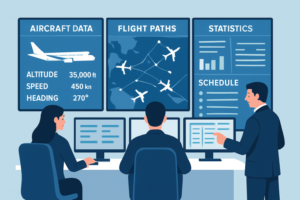
The FAA’s NextGen initiative is ushering in a new era for the National Airspace System using cutting-edge digital technologies. NextGen is upgrading communication, navigation, and surveillance infrastructure across the United States, enabling more precise routing, reducing fuel consumption, and improving safety. By introducing satellite-based tracking and collaborative decision-making tools, NextGen significantly increases airspace capacity while reducing delays. With these advancements, airlines can operate more predictably, and passengers benefit from smoother journeys with fewer disruptions. The scope and ambition of NextGen set the benchmark for how digital transformation can revolutionize entire transportation networks.
Final Thoughts
Digital tools are at the heart of aviation’s ongoing transformation, delivering improvements in efficiency, safety, compliance, and customer service. From integrated control centers to AI-driven cockpits and real-time cloud platforms, technology is reshaping nearly every aspect of flight operations. As airlines and airports continue to embrace innovation, staying ahead in this fast-moving digital era is essential to maintain competitiveness and meet today’s travelers’ expectations.