

When you think about it, your air conditioner has a tough job. Every summer, it runs for months on end, going hour after hour without rest to keep you cool. Yet most homeowners neglect their AC until there’s a problem.
And that can be expensive. A little routine maintenance will keep your system running smoothly, lower your cooling costs, and extend your unit’s lifespan. Best of all? Most air conditioner maintenance tasks are simple and cost-effective. You can do them yourself!
Here’s a simple checklist to help you maintain your AC.
Change Your Air Filter First
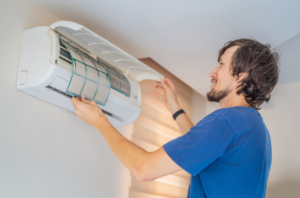 Ah, the air filter. It’s the easiest task on this list, but it’s also the most important.
Your AC’s filter traps airborne particles that could otherwise clog up your system. If it gets too dirty, it restricts airflow. Your AC has to strain to keep up its normal cooling power. Not only does that drive up your utility bill, but it also wears down the motor. Eventually, a neglected filter will cause your system to fail years sooner.
Check your filter monthly and replace it every one to three months. If you have pets or suffer from allergies, you may need to change it more frequently. Filters are available at any hardware store. They’re also inexpensive and easy to install.
Set a reminder on your calendar to replace it. Keep extra filters in your home so you don’t run out.
Clean the Outdoor Condenser Unit
Grab a pair of gloves and head outside. Locate your condenser unit. This is the big metal box on the ground next to your house. It pulls heat and humidity out of your home and expels it outdoors.
Leave gets trapped in and around the unit. Clearing away debris keeps your system humming along smoothly.
Before you get started, shut off the power to the condenser. Clear away any large debris by hand. Spray down the fins with a garden hose to remove any remaining dirt. Work from top to bottom to avoid rinsing dirt back over areas you’ve already cleaned. Do not use a power washer. High pressure will bend the fins.
Take a look around the condenser unit. Trim back any bushes, vines, or grass that crowd the unit. You should have at least two feet of clear space between it and anything else. This gives your condenser room to “breathe.”
Inspect the Condensate Drain Line
Your air conditioner pulls moisture from the air as it cools your home. That moisture collects in a drain pan and flows out of your house through a drain line. If this line becomes clogged, water will back up in your drain pan. That can cause water damage in your home, not to mention mold and humidity problems.
Locate your drain line near your indoor AC unit. It will look like a white PVC pipe. Every few months, pour one cup of diluted bleach or white vinegar down the line to prevent algae growth.
You can also identify a clogged line if you notice water pooling near your indoor unit. Remove the clog by hooking a wet/dry vacuum up to the end of the line on the outside of your home. Turn it on and let it suck out the debris.
Check and Clean the Coils
Every air conditioner has two sets of coils. There’s a smaller evaporator coil indoors and a larger condenser coil outdoors. Both of these coils attract dust and grime as your AC runs. Dirty coils reduce efficiency and make your system work harder.
You should clean your evaporator coil annually. Most hardware stores sell cans of no-rinse coil cleaner spray. Apply the spray and let the foam sit. It automatically dissolves the grime without you having to rinse it away.
NHS told us that for your outdoor coil, gently brush off any loose debris with a soft brush. Then rinse it off carefully with a garden hose. Avoid bending the coil’s thin metal fins. If you notice any bent fins, you can carefully straighten them with a fin comb. Bent fins trap air and reduce efficiency.
Test Your Thermostat
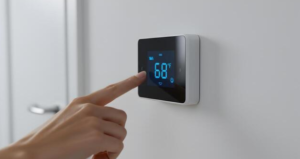 Believe it or not, a malfunctioning thermostat could be draining your wallet. Not only does it waste energy, but it can leave your home less comfortable than you want it to be.
Set your thermostat to a cool temperature and wait for the AC to turn on. Listen for strange noises as it turns on. Feel the temperature inside to make sure it matches the thermostat.
Consider upgrading to a programmable thermostat if you haven’t already. Programmable thermostats allow you to set different temperatures for different times of day. They can save you a bundle on cooling costs every month.
Inspect the Refrigerant Lines
Cold air comes from your outdoor condenser unit. It travels to your indoor unit through insulated refrigerant lines. These lines transport the actual refrigerant that cools your home.
Walk around the lines and inspect the insulation. Look for signs of wear, cracks, or insulation that’s fallen off. Broken insulation decreases efficiency, but you can fix it easily with foam pipe insulation from a hardware store.
Never attempt to check or adjust refrigerant levels yourself. Low refrigerant means you have a leak that needs to be handled by professional HVAC techs.
Inspect Your Ductwork
Did you know that leaky ducts can be one of the biggest sources of energy loss in homes? If conditioned air escapes through duct leaks before reaching living spaces, your AC has to work overtime to cool your home.
Inspect all accessible ductwork in your attic, basement, or crawl space. Seal any gaps, holes, or disconnects you find with metal foil tape. Don’t use regular duct tape. That doesn’t hold up under HVAC temperatures and will need to be replaced.
Check your home’s vents and registers as well. Make sure they aren’t blocked by furniture, rugs, or other objects. Restricting airflow from any vent can make it harder for your AC to evenly cool your home.
CASE STUDY: Keep Season-Trip Costly Air Conditioner Repair DOWN With Maintenance
CLIENT: Resident living in a warm coastal area. High usage of AC
PROBLEM: Heating bills were creeping up, and cooling seemed less effective…but Procrastinated getting their AC serviced. An emergency repairman had to be called during a heat wave.
WHAT WE DID:
- Replaced air filter monthly
- Cleaned the outdoor condenser unit
- Flushed condensate drain line
- Cleaned evaporator coils and condenser coils
- Checked refrigerant line insulation and plugged small leaks
- Checked thermostat operation
- Performed duct inspection and sealed leaks.
WHAT HAPPENED:
The system cooled faster, and energy bills went down about 15–20% a month.
AC did NOT break down during the high usage season.
AND…
Maintaining your air conditioner can be easy and help you avoid expensive repairs, save money on energy bills, and keep you cool all year long.
F.A.Q.
When should I have my air conditioner serviced?
Seasonally, or at least once a year.
How often should you change your AC filter?
Every 1-3 months.
What if I don’t clean my filter?
It will restrict airflow inside your home, causing your air conditioner to use more energy and possibly cause failure down the road.
Can I clean my air conditioner myself?
Yes! Service professionals recommend that you DIY monthly maintenance such as cleaning and changing your air filter, cleaning your evaporator and condenser coils, and cleaning your outdoor unit. For any maintenance dealing with refrigerant, leave it to the pros.
Why isn’t my air conditioner cooling my home?
Dirty air filters, evaporator, or condenser coils. Low refrigerant levels. Something blocking airflow.
How do I know if my condensate drain is clogged?
If you see water overflowing at your indoor unit. Or if your home feels more humid than normal.
Does cleaning my outdoor air conditioning unit actually help?
Yes! Cleaning any debris from around the outdoor unit allows for better airflow and efficiency.
What’s the benefit of installing a programmable thermostat?
You can set your temperatures to be lower when you’re asleep or away from home and raise them when you need cooling. You’ll use less energy and save money.
Do duct leaks decrease my AC performance?
Yes! Ducts can account for a lot of lost cooled air.
Is air conditioner maintenance really that important?
Yes! Not only will maintaining your air conditioner save you money on energy bills, but it can also prevent unexpected breakdowns and can greatly increase the lifespan of your air conditioner.
Make AC Maintenance a Habit
You don’t have to do all of these tasks at once. In fact, you shouldn’t. Simply build a routine you can stick to. Perform easy maintenance tasks yourself every month. Have a technician come once a year to handle the heavy lifting.
By taking care of your AC, your AC will take care of you. It will operate more quietly, cool your home more effectively, and last for many years to come. A few minutes of maintenance now will save you big money in AC repairs later. Pick one task from this list to start, and your future self will thank you!