

The Growing Role of AI in Healthcare
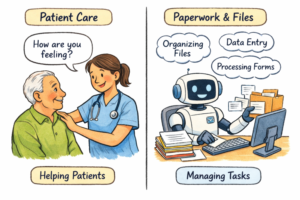
Artificial Intelligence is rapidly transforming the healthcare sector by offering innovative solutions that optimize operational efficiency and patient outcomes. AI-powered technology automates routine tasks. This saves time for healthcare professionals. They can focus more on patient care. With tools like medical chronology software, which make it easier to manage complex documentation, hospitals and clinics are better equipped to deliver high-quality care while handling larger volumes of patients efficiently.
Automated systems now shoulder many of the repetitive, administrative burdens in healthcare settings. AI’s ability to quickly process and analyze vast amounts of data helps medical staff make faster, better-informed decisions. As a result, patients get a smoother experience. They spend less time on paperwork. They receive more focused care.
These advancements are also driving changes in compliance and risk management strategies, making organizations more resilient in an increasingly complex regulatory landscape. AI offers more than efficiency. It improves safety, communication, and care coordination. This leads to better health outcomes.
Many healthcare providers now use AI in their core operations. This helps them reduce costs. It also keeps them ahead in medical technology. This approach is reshaping the patient experience, ensuring that healthcare systems remain robust and future-ready.
Administrative processes such as patient registration, appointment scheduling, and insurance verification have long been a bottleneck in the healthcare industry. AI-powered automation is addressing these challenges head-on by digitizing and optimizing workflows.
Indiana University Health used automation during a major event. It handled over 15,000 registrations. This removed the need for temporary staff.
The system now pre-registers over 300,000 appointments each month. It reduced processing time from 3.4 minutes to 2.5 minutes per patient.
This kind of operational improvement allows medical staff to redirect their focus from data entry and routine paperwork toward patient-facing activities. By minimizing administrative overhead, healthcare facilities can offer better support and care to those who need it most.
Key Takeaways
- AI-driven automation is streamlining administrative tasks, allowing healthcare professionals to focus more on patient care.
- Implementing AI in healthcare workflows can lead to significant reductions in operational costs and errors.
- Successful AI integration requires addressing challenges such as data privacy, staff training, and system interoperability.
Enhancing Clinical Workflows
AI’s impact extends to clinical environments, particularly through support for medical transcription and documentation. AI-powered scribes listen to consultations. They transcribe appointments in real time. This helps doctors avoid long note-taking. During a pilot at Mass General Brigham, the use of AI scribes led to a 40 percent reduction in reported clinician burnout, highlighting their value in addressing workforce well-being.
Despite these benefits, data from a study involving more than 100 physicians at Atrium Health suggests that broader efficiency gains and financial improvements have yet to materialize at scale. While AI scribes ease documentation-related stress, further research is needed to assess their impact on overall operational success.
Improving Patient Outcomes
AI technology is also advancing patient care by supporting early diagnosis, precision medicine, and individualized treatment plans. By analyzing medical records, imaging data, and other health information, AI-driven tools help providers detect disease earlier and recommend targeted interventions. For instance, AI platforms for cancer screening are improving diagnostic accuracy, reducing treatment costs, and improving long-term patient outcomes. According to an in-depth TechRadar review, these predictive technologies are shaping a new era of preventive healthcare.
Beyond diagnostics, AI is enhancing care coordination, medication management, and the ongoing monitoring of patients with chronic ailments. Hospitals are leveraging AI algorithms to identify at-risk patients, allocate resources more effectively, and track progress over time, ushering in more proactive and responsive models of care.
Addressing Implementation Challenges
While interest in AI is high, its rollout across healthcare systems presents several hurdles. According to NTT Data research, the vast majority of healthcare executives are enthusiastic about using generative AI, yet many organizations lack alignment and workforce skills to ensure successful integration. Seventy-five percent of respondents cited staff training gaps as a major barrier, while just half of organizations believe their AI strategy strongly supports business objectives.
Building robust data privacy protocols, ensuring interoperability across platforms, and reskilling teams are essential steps for maximizing AI’s value in healthcare. Additionally, leaders must foster a culture of adaptability and continuous learning to keep pace with evolving technology. HealthIT Analytics and other leading outlets stress the need for top-down commitment if the sector hopes to fully capitalize on the opportunities AI provides.
Future Prospects of AI in Healthcare
The future for AI in healthcare centers on developing mature data governance systems and refining existing technologies for secure, scalable automation. As organizations gain experience in deploying AI tools, the focus will move from experimentation to optimizing the data that powers these platforms. Integrating ethical standards with AI deployment will further support safe, equitable care delivery and safeguard patient trust. According to recent predictions from Healthcare IT Today, healthcare systems that prioritize data integrity and quality assurance will emerge as leaders in the next wave of digital transformation.
As these trends unfold, AI’s role will shift from simply enhancing efficiency to fundamentally reshaping how care is delivered. The continued evolution of AI-powered healthcare promises not only operational advancements but also a future in which medical treatment is faster, safer, and more personalized than ever before.
Conclusion
The integration of AI-powered process automation in healthcare is enabling providers to work more efficiently, reduce errors, and elevate the standard of patient care. Despite remaining obstacles in training, data management, and interoperability, ongoing advancements in artificial intelligence will continue to expand its transformative potential in healthcare.