

Dental implants have brought remarkable advances to restorative dentistry, providing enduring, stable solutions for individuals with missing teeth. For anyone considering dental implants, understanding the science behind their success and longevity is crucial. Not only can these restorations dramatically improve oral function and aesthetics, but they also offer a sense of confidence and normalcy that bridges and dentures sometimes cannot match. Modern dental implants work by mimicking the natural function of tooth roots, supporting replacement teeth that look and feel authentic. Thanks to continual advancements in materials and surgical techniques, dental implants today are more reliable and longer-lasting than ever before. Patients who maintain excellent oral hygiene and consult experienced dental professionals experience decades of successful results and improved quality of life.
Implant dentistry’s popularity continues to soar as people seek durable, natural-looking tooth replacements. Modern implant solutions are based on extensive research in biomechanics, material science, and biology, which collectively minimize complications and maximize patient benefits. In addition to durability, the range of customization and rehabilitation options allows implants to be tailored to individual needs. From single-tooth replacements to full arches, current implant technology prioritizes both comfort and functionality.
Key Takeaways
- Dental implants can offer decades of reliable function when properly cared for.
- Advanced materials and contemporary techniques have markedly improved implant outcomes.
- Preventing infection and inflammation through good hygiene is vital for implant survival.
- Exciting research and innovative designs promise an even brighter future for implant dentistry.
Understanding Dental Implants
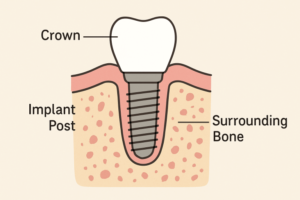
A dental implant consists of a small titanium post surgically inserted into the jawbone to mimic the root of a tooth. As the site heals, the jawbone fuses with this metal post through a process called osseointegration. This process is foundational, as the integration forms a strong, stable base for a dental crown, bridge, or denture to be securely attached, restoring full oral function and a natural appearance. Implants have a unique advantage in that they actively preserve jawbone structure, preventing the bone loss commonly associated with missing teeth. The biocompatibility of titanium, along with recent improvements in material composition, allows implants to be accepted by the body without triggering allergic reactions or rejection.
Longevity of Dental Implants
Long-term studies indicate that dental implants can last upwards of thirty to forty years, sometimes even a lifetime, especially in patients who adhere to strict oral hygiene protocols. Research conducted by experts at the University of Gothenburg monitored implants placed between the 1960s and 1980s, revealing that the vast majority remained functional decades later, according to Science Daily. This impressive track record has strengthened global trust in implant procedures.
Advancements in Implant Materials
Innovations have propelled implant dentistry forward, with improvements in both core post materials and surface coatings. New developments in hydroxyapatite coatings, often derived from natural sources such as bovine bones or eggshells, have enhanced bone-to-implant contact, promoting faster healing and integration. These coatings create microenvironments that facilitate bone cell attachment and proliferation, making implants even more reliable.
Role of Bacteria in Implant Health
Success for any implant hinges on controlling bacterial colonization. Even with the most advanced materials, the mouth remains a habitat for millions of bacteria. Research published by the University of Zurich describes how microorganisms may become trapped inside the implant’s internal components during surgery, potentially impacting long-term health. If not carefully managed, oral bacteria can lead to inflammation known as peri-implantitis, which can ultimately result in implant failure. The development of antibacterial coatings and the adoption of strict sterile surgical protocols continue to minimize this risk, resulting in safer patient outcomes.
Innovations in Implant Design
Engineers and dentists are collaborating on new-generation implants aimed at replicating natural tooth sensation and function. Some of these cutting-edge designs include biodegradable surface layers that promote nerve tissue growth, potentially restoring the sensory responsiveness lost after tooth extraction. Researchers have also explored shape-memory and flexible alloys that allow implants to absorb pressure similar to natural teeth, helping reduce stress on neighboring bone and improving overall comfort. These exciting advancements are transforming what patients can expect from their implant experience.
Importance of Oral Hygiene
Diligent oral hygiene remains nonnegotiable for protecting dental implants. Regular brushing, the use of interdental brushes, and routine professional cleanings prevent the buildup of biofilm and food debris. These actions reduce the risk of peri-implant mucositis or peri-implantitis, two inflammatory conditions that can threaten implant stability. Scientific reviews indicate that patients who use appropriate cleaning aids around their implants achieve far higher long-term success rates and fewer complications.
Future Prospects
The next frontier in restorative dentistry may involve regenerative medicine. Scientists are investigating the possibility of cultivating bioengineered teeth in laboratory settings. These teeth, grown from human stem cells, could one day eliminate the need for synthetic implants. Live Science recently highlighted successful early-stage trials that show human teeth can be grown in lab environments, raising hopes that patients will eventually have entirely natural options for tooth replacement.
In summary, the scientific foundation of lasting dental implants lies in material innovation, advanced surgical protocols, effective infection control, and personalized oral hygiene. With continued progress in both technology and clinical research, patients have more reasons than ever to trust dental implants as a long-term investment in their oral health and confidence.
Conclusion
Dental implants represent a remarkable fusion of science, innovation, and patient-centered care, offering a dependable solution for long-term oral health. With the ability to last for decades, they are among the most durable options for tooth replacement when supported by proper hygiene and professional oversight. Advances in materials, implant design, and surgical techniques have significantly improved success rates, making modern implants safer, more efficient, and more comfortable than ever before. Equally important is the role of prevention; maintaining excellent oral hygiene and minimizing bacterial risks are essential to preserving implant stability. As research continues to push boundaries, emerging technologies and regenerative approaches promise even more natural and long-lasting outcomes. Ultimately, dental implants not only restore smiles but also enhance overall quality of life, making them a forward-thinking investment in lasting oral wellness.