Walk into almost any middle school or high school, and you will hear the same little rhythm in the hallway. The bell rings. A pack of kids moves fast. A teacher tries to keep the flow going. Someone asks for a hall pass. Someone else disappears for five minutes, then ten.
And then there is the bathroom.
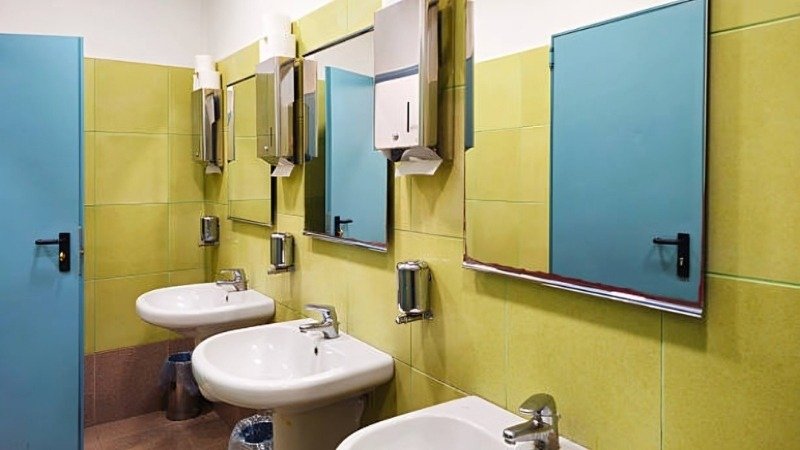
It sounds dramatic to say “hotspot,” like we are talking about a crime show. But bathrooms have always been one of the few places in a school where privacy is built in. That matters more now because the substances showing up in schools are built for speed, stealth, and quick relief. Vapes. Nicotine pouches. Edibles. Quick-hit pills that fit in a pocket like a mint. Stuff you can use in under a minute, then walk back to class like nothing happened.
So yeah, the school bathroom has become a stage. Not the only one. But a big one.
Why the bathroom works as a “micro-market.”
Bathrooms are not magical. They are just predictable. They are the one space where a student can close a door, lower their voice, hide their hands, and get a break from adult eyes. That’s the whole recipe.
A lot of adults think drug use in schools is about rebellion. Sometimes it is. But a lot of the time it’s about something more boring and more concerning: routine. A quick buzz before math. A nicotine pouch before a presentation. A couple of hits between classes because your body is already expecting it.
Bathrooms also create a weird little economy. Not money, always. Social currency. Who has the device? Who has the “good flavor.” Who can get the pouches? Who knows which stall is safest because the lock actually works and the angle blocks the crack under the door. This isn’t romantic. It’s logistics.
And because kids are kids, the setting matters. Bright lights. Loud hand dryers. A teacher knocked and said, “You okay in there?” That turns into adrenaline. That turns into a story later. For some students, that rush becomes part of the draw.
The quick-hit substances that fit the setting
Older forms of teen drug use often had friction. You needed time. You needed cover. You needed prep. The current wave is more like “open, use, hide, done.”
A few reasons these products slide into bathrooms so easily:
- They are small and easy to conceal (pouches, pens, tiny blister packs)
- They are fast (seconds, not minutes)
- They leave a less obvious smell than smoke, and a lot of schools still rely on smell as the “tell.”
- They can look like normal items if you do not know what you’re looking at
That last part is underrated. Adults can miss what they have not been trained to notice. A pouch tin can look like gum. A vape can look like a USB. A pill can look like… well, a pill. Kids know that.
The social contagion piece people avoid talking about
If you want to understand bathroom use, you have to understand something that feels uncomfortable to say out loud: a lot of teen behavior spreads like a trend.
Not because teens are bad. Because teens are wired for belonging.
Bathrooms become the place where “everyone is doing it” can feel true, even when it’s not. A student steps in, sees two people vaping, hears laughter, and sees someone offering a pouch like it’s nothing. That changes what feels normal. And once something feels normal, it stops feeling risky.
This is where adults sometimes mess up the conversation. They say, “These kids have no fear.” That’s usually wrong. Plenty of students feel fear. They just fear the social cost of saying no more than they fear the health cost of saying yes. At least in the moment.
And the moment is everything in a hallway.
Peer pressure isn’t always aggressive
Most people imagine peer pressure as someone saying, “Do it, or you’re lame.” Sure, that happens. But a lot of the pressure is softer:
- “It helps. You’ll chill out.”
- “Just try it once.”
- “You look stressed. This fixes it.”
- “Here, take one. It’s not a big deal.”
It can sound like care. That’s what makes it sticky.
Then add the weird intimacy of a bathroom. It’s close quarters. It’s secretive. It creates a mini “us vs them” feeling. A shared secret can bond people fast, even if it’s a bad bond.
The hall pass problem no one wants to own
The hall pass is not just a piece of paper. It’s a permission structure.
Schools need students to use the bathroom. Obviously. But as soon as passes become a routine, they also become a loophole. And kids are excellent at turning systems into loopholes. That’s not a moral statement. It’s just reality.
A student who is developing a daily nicotine habit doesn’t think, “I want to break rules today.” They think, “I need to get through fourth period.” If their body expects nicotine, the urge can feel urgent. Irritation spikes. Focus drops. Restlessness builds. The bathroom becomes the obvious exit ramp.
Then the classroom becomes harder to manage. Teachers see a kid leaving all the time and assume defiance. The student feels watched. That stress increases cravings. So the cycle tightens.
You can see how a policy debate starts here. Some people push for strict limits. Others argue that strict limits punish kids who actually need the restroom, including students with medical needs or anxiety. Both sides have a point. The problem is that the substance-use reality sits in the middle and makes everything messier.
“Fear of withdrawal” is the quiet engine
This is where the conversation needs to stay factual and calm.
When early use shifts into daily use, you start to see “maintenance” behavior. Not getting high for fun, exactly. More like avoiding feeling bad. If a student is dependent on nicotine, they can feel edgy, foggy, or restless without it. Some will describe it as “I can’t think.” Others say they feel angry for no reason. Some just feel low.
So the bathroom trip becomes less about the substance and more about avoiding discomfort. That’s why it can show up in students who don’t fit the stereotype adults carry in their heads. Good grades. Sports. Clubs. A kid who seems “fine.” Dependence does not always announce itself.
This is also why it’s dangerous to cover the issue like it’s purely about “bad choices.” Choices matter, sure. But once dependence starts, behavior can look a lot like problem-solving. It’s just problem-solving in a harmful direction.
And when that student feels trapped in a long class, the bathroom becomes the obvious solution.
How does this shift in school policy affect debates
Once bathrooms become associated with use, schools face a brutal balancing act. Students deserve privacy and dignity. Schools also have a duty to protect students. Those collide fast in a bathroom.
Policy debates usually fall into a few buckets:
1) Supervision vs privacy
More monitoring can deter use, but it can also create tension and mistrust. And if students feel policed in basic needs, they push back in other ways.
2) Safety vs fairness
Bathroom limits can reduce clustering, but they can also hurt students who have legitimate needs. Some students already avoid bathrooms due to bullying or fear. Tightening access can make that worse.
3) Punishment vs support
Some policies lean hard on consequences. Others focus on education and intervention. The reality is that schools often end up doing both, sometimes inconsistently, which confuses everyone.
And then there’s the practical layer. Teachers are already stretched. Front offices are busy. Administrators are dealing with everything from attendance to behavior to parents. Even a “simple” new bathroom policy becomes a daily operational load.
This is why schools argue about it so much. It’s not just values. It’s staffing, time, and what the building can realistically handle.
What adults often miss: bathrooms are also a bullying zone
Here’s a small digression that matters. Bathrooms aren’t only about substances. They are also where a lot of social aggression happens because adults aren’t there. If you frame bathrooms only as “drug zones,” you can miss that some students avoid them entirely for safety reasons.
So when schools change bathroom access, they can accidentally push vulnerable students into worse situations. That’s not an excuse to ignore substance use. It’s a reminder that bathrooms are a complex environment, not a single-issue space.
How to cover it without moral panic
If you’re writing about this topic, the tone matters more than people think. Panic makes the story louder, but it also makes it less useful.
A better approach is to treat it like a systems issue with human stakes. Because it is.
Here are a few ways to keep coverage grounded:
Use specifics, not slogans.
Talk about the products showing up and why they fit the environment. Explain the speed, concealability, and social spread.
Separate experimentation from dependence.
Those are different patterns. Don’t lump them together. When you do, you either scare people unfairly or you downplay risk.
Avoid turning bathrooms into villains.
It’s not the bathroom. It’s the privacy plus the peer dynamic plus the product design plus the stress teens carry.
Include the classroom reality.
Teachers are not detectives. They are trying to teach. A story that ignores the daily classroom impact isn’t telling the truth.
Don’t paint every student as a user.
Most kids are not using. But the ones who are can shape the atmosphere for many others.
Also, be careful with the “epidemic” language. It can be accurate in some places, but it can also lead to policies that are more about optics than outcomes. If you want to be taken seriously by educators, parents, and students, keep it clean and clear.
When early use turns into daily dependence
This is the hardest part because it messes with how people like to think about teenagers. A lot of adults prefer a simple story: good kids don’t do this, bad kids do. Reality does not work that way.
Daily dependence can start with something that feels small:
- stress relief between classes
- fitting in with a group
- curiosity and access
- “It helps me focus.”
- “It calms me dow.n”
Then it becomes patterned. At the same time. Same place. Same ritual. The bathroom is perfect for ritual because it’s consistent. The student learns, “If I go there, I feel better fast.” That’s how habits form.
And once a habit forms, it can sit alongside a normal-looking life. That’s why schools sometimes miss it until it’s obvious. By the time it’s obvious, the student is often deep into the routine.
If you’re covering teen substance use more broadly, it helps to point readers toward credible, treatment-oriented resources so they understand what support and recovery can look like. For example, information from a program like PA Drug Rehab can help anchor the topic in real-world care rather than rumor and fear.
What it looks like in the real hallway
Let’s bring it back to the beginning, because this story lives in small moments.
A kid asks for a pass. The teacher hesitates. The kid gets tense. The teacher thinks, “Why again?” The kid thinks, “I can’t sit here like this.” No one says the real thing out loud.
Then in the bathroom, there’s a cluster. Someone is guarding the door. Someone is laughing too loudly. Someone is acting like the leader. Someone else is quiet, using quickly, eyes down, like they just want relief.
That mix is why the bathroom has become such a focal point. It isn’t one type of student. It isn’t one motive. It’s a place where multiple motivations overlap.
And if you’re a parent, teacher, or student reading this, it can feel heavy. But the useful takeaway isn’t panic. It’s clarity: quick-hit substances match private spaces, and teen social dynamics can turn those spaces into repeat-use zones.
That’s the story. Not a scary headline. Just a real pattern that schools are now trying to manage. Please visit my site, Outstandingblogs, for more details.