
Table of Contents
Annual Inspections
Cleaning and Maintenance
Proper Ventilation
Carbon Monoxide Detectors
Safe Clearance
Efficient Operation
Fuel Quality
Child and Pet Safety
There’s nothing quite like the warmth and inviting glow of a gas fireplace, especially during colder months. Gas fireplaces are prized for their convenience, energy efficiency, and consistent heat output. However, ensuring they operate safely—and optimally—is key to protecting your family and your home. If you’re a local homeowner seeking professional support, consider scheduling your Atlanta gas fireplace service for expert maintenance and peace of mind as you enjoy the comfort of your fireplace all season long.
Whether you’re new to gas fireplaces or a seasoned user, understanding essential maintenance, efficient operation practices, and safety precautions can save you money and safeguard your loved ones. Below, you’ll find step-by-step guidance to keep your fireplace in top shape while optimizing its performance throughout the year.
Annual Inspections
An annual inspection of your gas fireplace isn’t just a suggestion—it’s a critical safety practice that can prevent minor issues from escalating into costly repairs or hazardous conditions. Certified professionals examine burners, valves, fans, and the entire gas line assembly for leaks or malfunctions. They can also ensure your fireplace is venting correctly, thereby protecting your family from potential dangers such as gas leaks or carbon monoxide poisoning. Regular inspections are especially important as even a small malfunction can create safety risks in homes.
Cleaning and Maintenance
Routine cleaning is fundamental for both efficiency and appearance. Start by wiping down the glass doors with a fireplace-safe cleaner to remove soot or fog buildup. Check the pilot light and burner ports for debris; dust and residue can hinder ignition, resulting in uneven flame patterns or poor gas combustion. If your fireplace has logs, periodically inspect and restack them according to your manufacturer’s guidelines to ensure proper airflow and consistent flames.
Proper Ventilation
Proper airflow is crucial for the safe operation of a gas fireplace. Over time, the flue and venting system can become obstructed with animal nests, leaves, or dust, allowing harmful gases like carbon monoxide to accumulate indoors. Check your vents regularly, especially after windy or stormy weather. If you suspect a blockage but are unable to resolve it yourself, contact a local fireplace professional to assess and clear any obstructions. Regular duct cleaning can also help maintain clear airflow, improve efficiency, and reduce the risk of hazardous gas buildup.
Carbon Monoxide Detectors
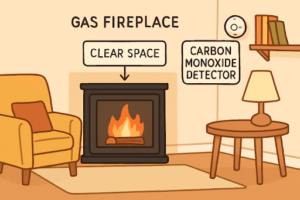
Installing carbon monoxide (CO) detectors in your home is non-negotiable for anyone with a gas fireplace. These lifesaving devices alert you to even trace levels of CO, a colorless and odorless gas that poses serious health risks. Place detectors in the same room as your fireplace and outside each sleeping area. Test devices monthly and replace batteries at least once a year to ensure they’re functioning properly.
Safe Clearance
A major aspect of fireplace safety is keeping the surrounding area clear of flammable objects. Always maintain a minimum distance of three feet between the unit and any items, such as upholstered chairs, blankets, curtains, or holiday decorations. Wall-mounted shelves and TV screens should not be installed directly above the fireplace without confirming that heat clearances meet the manufacturer’s safety standards. Supervise the area during holidays or special occasions when decorations may be changed.
Efficient Operation
Optimize efficiency by operating your fireplace at the correct flame height, typically keeping flames between three and six inches high. Taller flames may seem cozier, but they consume excess gas without providing additional heat. Most modern gas fireplaces feature an adjustable control knob, enabling you to fine-tune the flame size for optimal comfort and fuel efficiency. You’ll also want to avoid running the fireplace continuously for extended periods, which strains components and increases energy usage.
Fuel Quality
Always use the specific gas type recommended by your fireplace manufacturer (usually natural gas or propane). Never substitute other fuels or attempt to modify the system, as this can compromise performance and void the warranty. If you’re unsure about the quality or source of your gas, consult your local supplier or a licensed technician to confirm its purity and compatibility. Consistent use of recommended fuel enhances combustion, limits residue buildup, and protects sensitive components.
Child and Pet Safety
Children and pets are naturally drawn to warm, glowing fireplaces, but high temperatures on the glass or screens can cause burns almost instantly. Establish a “no-play” perimeter, ideally with the help of a sturdy safety gate or fireplace screen. Educate children on the risks and ensure pets are supervised—especially during the fireplace’s initial warm-up and cool-down periods. Consider adding additional safety equipment, such as heat-resistant gloves or magnetic screen locks, for added peace of mind.
Conclusion
Using a gas fireplace efficiently and safely comes down to consistent maintenance, mindful operation, and proactive safety measures. By scheduling regular inspections, ensuring proper ventilation, and prioritizing clearance and monitoring devices, homeowners can enjoy reliable warmth without unnecessary risks. With the right habits and professional support when needed, a gas fireplace can remain a cozy, efficient, and dependable feature of your home year after year.
Please visit my site, Outstandingblogs, for more details.