
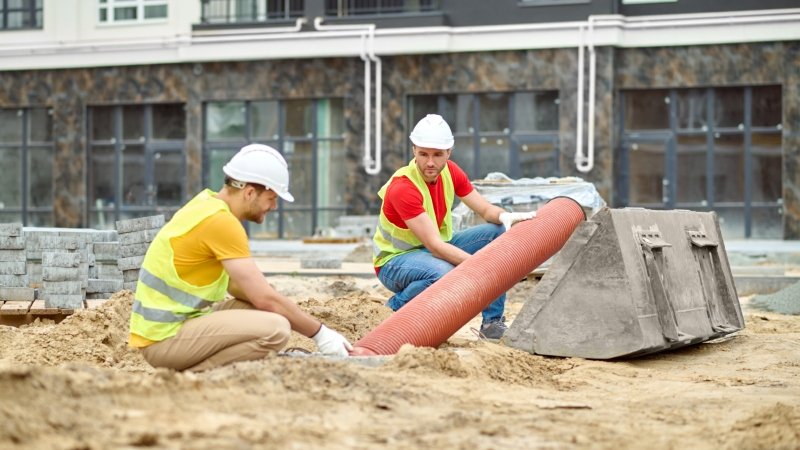
Modern pipe rehabilitation lets you fix what’s underground — without destroying everything above it.
75%
Less landscape damage vs. traditional dig
50%
Average cost savings on restoration
50 yrs
Expected lifespan of cured-in-place lining
1–2 days
Typical project completion time
When your sewer line starts showing signs of trouble — slow drains, recurring backups, gurgling pipes — the dread that follows isn’t just about the plumbing. It’s about the driveway that might have to come up, the garden you spent years cultivating, the mature oak tree whose roots stretch across the entire yard. Traditional sewer repair felt like a trade: fix your pipes, lose your property.
Today, that trade is no longer necessary. Trenchless sewer repair has fundamentally changed what it means to rehabilitate underground pipes, making it possible to restore full sewer function with minimal surface disruption. For homeowners weighing their options, understanding this technology could save thousands of dollars — and years of landscaping heartbreak.
What is trenchless sewer repair?
At its core, trenchless technology is a category of pipe rehabilitation methods that access and repair sewer lines with little to no excavation. Instead of digging a long trench along the pipe’s entire length, technicians typically need only one or two small access points — an existing cleanout, a manhole, or a modest excavation no bigger than a laundry basket. From there, specialized equipment does the work underground.
The two most widely used methods are cured-in-place pipe lining (CIPP) and pipe bursting. CIPP involves inserting a resin-saturated liner into the damaged pipe, then inflating and curing it in place to create a smooth, jointless pipe within a pipe. Pipe bursting, on the other hand, fractures the old pipe outward while simultaneously pulling a new pipe of equal or larger diameter through the same path. Both approaches solve the core problem — a failed, cracked, or root-infiltrated sewer line — without the collateral damage of open trenching.
The real cost of traditional dig-and-replace
Most homeowners focus on the quoted price for sewer work. What they often fail to anticipate is the full cost of restoration after a traditional excavation. Consider everything that stands between a contractor’s shovel and your sewer pipe: concrete driveways, brick patios, mature landscaping, irrigation systems, gas lines, and underground utilities all become obstacles — and potential casualties.
Traditional excavation
- Full trench along pipe length
- Driveway/patio demolition
- Mature trees at risk
- Garden and lawn destruction
- 2–5 day project timeline
- Costly surface restoration
Trenchless methods
- 1–2 small access points only
- Hardscaping remains intact
- Root systems undisturbed
- Lawn and garden preserved
- 1–2 day project timeline
- Minimal surface restoration
Restoration costs after traditional trenching can easily run from $3,000 to $10,000 or more, depending on the complexity of the landscape. Resodding a torn-up lawn, replanting mature shrubs, repaving a concrete driveway, or replacing an irrigation system all add up quickly — and those are costs that rarely appear in the original repair estimate.
Protecting your landscape investment
For many homeowners, the landscape represents a significant financial and emotional investment. A mature garden built over decades — with established trees, perennials, custom hardscaping — cannot simply be “put back” after excavation. Transplanted trees often don’t survive. Replanted perennials take years to mature. Repoured concrete may not match the original.
“The landscape isn’t just decoration. It’s stormwater management, property value, shade, privacy, and sometimes decades of personal care. Protecting it matters as much as fixing the pipe.”
Trenchless methods sidestep this problem entirely. Because access is limited to one or two small points, the vast majority of your yard remains untouched. Trees are undisturbed at their root zones. Flower beds stay intact. Driveways don’t need to be torn apart and repoured. The pipe gets repaired; the landscape remains yours.
Is every sewer line a candidate?
Trenchless repair works exceptionally well for most residential sewer scenarios, but it isn’t a universal solution. A video camera inspection — which any reputable contractor will perform before recommending any method — will reveal the pipe’s condition, material, diameter, and the nature of the damage. Heavily collapsed pipes with severe structural failure may still require some excavation. Pipes that have shifted significantly due to ground movement may not accept a liner cleanly.
Pro tip: Always request a pre-repair sewer camera inspection with recorded footage. This gives you a clear view of the damage, confirms the right repair method, and provides documentation for insurance or future home sales. A contractor who skips this step is a red flag.
That said, the majority of common sewer issues — root infiltration, crack and joint failure, corrosion, minor collapse, and pipe scale buildup — are excellent candidates for trenchless rehabilitation. If your pipe is otherwise aligned and the pipe wall has sufficient integrity to anchor a liner, you’re likely a strong candidate.
Long-term performance and warranty
One concern homeowners sometimes raise is durability. Will a liner hold up as well as a new pipe? The evidence from decades of installations is reassuring. Cured-in-place liners are typically rated for 50 years or more, and they can actually improve on the original pipe’s performance. The seamless interior surface reduces friction, resists root re-intrusion, and eliminates the joints and cracks that allowed problems to develop in the first place.
Most reputable contractors back their trenchless work with warranties ranging from 10 to 25 years on labor and materials. Some cured-in-place products carry manufacturer warranties that extend even further. When you compare this to the unpredictable lifespan of an aging clay or cast iron sewer line, the math favors rehabilitation.
Making the decision
If your home is showing signs of sewer trouble, the best first step is a professional camera inspection. From there, a qualified contractor can tell you definitively whether trenchless repair is appropriate, which method best suits your pipe’s condition, and what the full cost comparison looks like versus open excavation. Ask for itemized quotes that include surface restoration — this is where the true cost difference becomes visible.
Sewer repair doesn’t have to mean a yard in ruins and a budget in shock. With the right technology and the right contractor, you can fix the problem underground and keep everything above ground exactly as you worked to build it.