
Dealing with a broken tooth can feel overwhelming, particularly when you’re unsure about your repair options or how much each treatment might cost. Fortunately, modern dentistry offers a range of effective solutions. Learning about each treatment, including the dental implant repair cost and other alternatives, can help you make decisions that protect both your smile and your wallet.
Understanding your choices is crucial because a broken tooth impacts not just your appearance but also your dental health and comfort. The best course of action depends on several factors, including the extent of the damage, your individual dental goals, the tooth’s location, and your financial situation. Consulting a dental professional early enables you to select the treatment that brings optimal, lasting results.
It’s also helpful to remember that timely treatment can prevent additional complications, such as infection or worsening pain. In most cases, the sooner you seek help, the broader your options and the better the outcome. Dental offices can provide quotes for different procedures, so it’s wise to ask questions regarding pricing and potential alternatives before deciding on a path forward.
If you’re searching for personalized care, North Orange Family Dentistry specializes in a range of restorative treatments for broken teeth, providing expert guidance and tailored solutions for every patient.
Key Takeaways
- Repairing a broken tooth can involve several treatment options, each with different costs and processes.
- Severity of the tooth damage and overall dental health are major factors in selecting the right repair option.
- It’s important to speak with a dental professional to find an approach that fits your needs and budget.
Dental Bonding
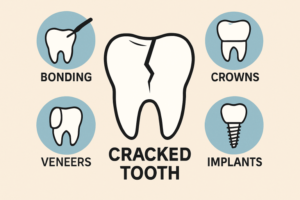
Dental bonding is often the first line of defense for smaller chips and surface cracks. The method involves applying a tooth-colored resin to the affected area, which the dentist then shapes and hardens using a special light. Bonding is a fast, non-invasive, and relatively inexpensive procedure that can usually be completed during a single visit. However, it does have its limitations in terms of durability. Bonded teeth may need touch-ups or replacement after a few years, particularly if the damage was severe or located in a high-pressure area.
- Cost:$100 to $600 per tooth
- Pros: Affordable, minimally invasive, quick results
- Cons: Less robust than crowns or veneers, potential need for future repairs
Dental Crowns
For extensive fractures or if a tooth has lost a significant portion of its structure, a dental crown may offer the best protection. Crowns are custom-made to cover the entire visible portion of the tooth, restoring its shape, strength, and appearance. The process involves reshaping the damaged tooth, making an impression, and fitting a temporary crown. A permanent crown is placed after it has been crafted in a dental lab. Crowns are very durable and are ideal for molars or teeth that take on a lot of bite force. They do, however, require more than one dental visit and come at a higher cost.
- Cost:$500 to $3,000 per tooth
- Pros: Long-lasting, protective, looks and feels like a natural tooth
- Cons: More expensive, requires multiple appointments
Veneers
Veneers are thin, custom-made shells designed to cover the front surface of teeth. These are the go-to choice for patients with minor cracks, chips, or discoloration affecting visible front teeth. Veneers can dramatically improve the appearance of a smile and are highly stain-resistant. However, the procedure is irreversible as a small amount of enamel must be removed before placement. Veneers don’t add structural strength, so they’re not suitable if the damage is extensive or affects the inner tooth.
- Cost:$500 to $2,500 per tooth
- Pros: Excellent aesthetic results, resistance to staining
- Cons: Permanent alteration of the tooth, does not work for deep or large breaks
Root Canal Therapy
When the break extends deep enough to expose or threaten the tooth pulp, a root canal may be necessary to save the tooth. During this procedure, the dentist removes the infected or damaged pulp, cleans the canal, and fills it with a biocompatible material. Most often, a crown is used post-procedure to restore full function and protect the repaired tooth. This approach is a tooth-saving solution that can stop pain and prevent infection, but it is more complex and costly than other treatments.
- Cost:$500 to $2,000 for the root canal, plus $500 to $3,000 for a crown
- Pros: Retains your natural tooth, resolves pain and infection
- Cons: Costs can add up, and treatment takes several visits
Dental Implants
In cases where the tooth cannot be saved, dental implants provide a permanent and highly functional solution. The procedure involves placing a titanium post directly into the jawbone, which acts as an artificial tooth root. After healing, a natural-looking crown is attached to the post. Implants not only restore aesthetics and chewing function but also help prevent bone loss in the jaw. Their main drawback is cost and the need for an oral surgical procedure, though the long-term satisfaction rate is very high. For an in-depth overview of implant procedures, visit Mayo Clinic’s resource on dental implants.
- Cost:$3,000 to $5,000 per tooth
- Pros: Permanent, attractive results, helps maintain oral structure
- Cons: Most expensive, involves surgery and extended healing
Factors Influencing Costs
The final price you pay for tooth repair is shaped by different variables. Severity of the damage is the biggest factor, as more complex procedures cost more. The tooth’s location and function also matter, with front teeth repairs sometimes less expensive than those for hard-to-reach molars. Where you live and the skill level of your dentist, can also impact prices. Finally, the choice of material, whether budget-friendly composite or advanced porcelain, plays a part in the overall cost.
- Severity of Damage: Greater damage requires more extensive work and thus higher costs.
- Location of Tooth: Anterior teeth are generally easier and cheaper to repair than posterior teeth.
- Geographic Location: Prices can differ significantly between states and metropolitan areas.
- Materials Used: Higher-quality materials mean a higher investment but increased durability and aesthetics.
Insurance Coverage
Most dental insurance plans will partially cover the procedures necessary to repair a broken tooth if they are deemed medically required. Coverage for cosmetic treatments, such as veneers, is generally not included, so it is important to review your policy and speak directly with your provider before beginning treatment. Your dentist’s office may also be able to help you navigate your insurance terms and estimate your out-of-pocket costs.
Conclusion
Addressing a broken tooth is an investment in your comfort and health. Each treatment option carries its pros and cons, along with varying prices, making it essential to consult a knowledgeable dental professional who can recommend the solution that is best for you. Acting promptly after a dental injury improves your options and your long-term prognosis. If you are faced with a dental emergency or seeking preventive advice, your dentist is your most important resource for a confident, healthy smile.